Building Authority Signals That Get Your Brand Recommended by AI
AI search engines recommend brands they trust. Here are the specific authority signals they look for and a tactical playbook for building each one across your own site, Wikipedia, LinkedIn, forums, and industry publications.
Key Takeaways
- AI search engines do not recommend brands randomly. They look for specific authority signals: consistent multi-source presence, expert attribution, structured formatting, recency signals, and entity clarity.
- Multi-source presence is the single most important authority signal. AI engines cross-reference information from 10 to 20 sources before making a recommendation, and brands that appear on only their own website fail this verification step.
- E-E-A-T signals (Experience, Expertise, Authoritativeness, Trustworthiness) directly influence whether AI engines trust your content enough to recommend it.
- A 6-platform source strategy covering your own site, Wikipedia, LinkedIn, industry publications, review sites, and forums creates the verification layer AI engines require.
- Building authority signals is a 60 to 90 day process, not an overnight fix, but brands that execute it consistently see measurable improvements in their AI recommendation rate within the first 30 days.
How AI Engines Decide Who to Recommend
When someone asks ChatGPT "What is the best accounting software for small businesses?" the engine does not flip a coin. It follows a specific retrieval and ranking process:
- The query is sent to a search engine (Bing for ChatGPT, Brave and Bing for Perplexity, Google for Gemini)
- The top 10 to 20 URLs are retrieved
- That content is chunked into 200 to 500 word segments
- The chunks are re-ranked by relevance
- The top 5 to 10 chunks are passed to the language model as context
- The AI generates an answer with specific brand recommendations based on that context
This means getting recommended is not about what is in your content alone. It is about whether your brand appears across the sources these AI engines already trust, whether those sources say positive things about you, and whether the information is structured in a way the AI can parse.
With 800M+ weekly AI search queries and a 4.4x higher conversion rate from AI referrals, the brands that understand and build these authority signals have a massive advantage.
The 5 Authority Signals AI Engines Trust
1. Consistent Multi-Source Presence
This is the single most important signal. AI engines are designed to verify information across multiple independent sources. If your brand only exists on your own website, the AI has no way to confirm your claims.
The threshold for recommendation is roughly 3 to 5 independent sources mentioning your brand consistently. Below that, you are unlikely to appear in AI-generated answers. Above 7 to 8 sources, your recommendation rate increases dramatically.
What "consistent" means:
- Your company name, description, and core value proposition are the same across all sources
- Your product positioning does not contradict itself between your website and third-party mentions
- Your key claims (features, pricing tier, target audience) are verified by independent sources
- Recent mentions confirm you are still active and relevant
97% of businesses fail this signal because they have never deliberately built a multi-source presence strategy. Their brand exists on their own domain and maybe a few social profiles, but they have no presence on the specific sources AI engines use for verification.
2. Expert Attribution (E-E-A-T)
E-E-A-T, which stands for Experience, Expertise, Authoritativeness, and Trustworthiness, is a concept from Google's search quality guidelines, but it applies directly to AI search. AI engines weight content more heavily when it comes from identifiable experts with verifiable credentials.
What AI engines look for:
- Named authors with linked bios (not "Admin" or "Staff Writer")
- Credentials and experience tied to the topic ("10 years in SaaS marketing" or "Former VP of Engineering at [known company]")
- Author presence across platforms (LinkedIn profile, speaking engagements, other publications)
- Company authority markers (founding date, team size, notable clients, awards)
- First-hand experience signals (original research, case studies, proprietary data)
Content from anonymous or unattributed sources is treated as significantly less trustworthy by AI engines. This is why brands that invest in personal branding for their founders and subject matter experts see higher AI recommendation rates.
3. Citation-Friendly Formatting
AI engines parse content using automated systems that work best with specific content structures. Brands that format their content for AI readability get recommended more often.
High-impact formatting signals:
- Answer-first structure. The first 1 to 2 sentences directly answer the implied question of the page.
- Clear H2/H3 hierarchy. Headers structured as questions or clear topic labels that AI can map to queries.
- Lists and tables. Structured data formats that AI can extract cleanly.
- FAQ sections. Explicit question-and-answer pairs that map directly to user queries.
- Schema markup. FAQ schema, Product schema, Organization schema, and Author schema that give AI engines machine-readable data.
- Comparison tables. Side-by-side feature or product comparisons that AI engines can reference directly.
Content that is formatted as long, unstructured narrative paragraphs is significantly harder for AI engines to extract recommendations from, even if the content itself is authoritative.
For more on why formatting matters and what specific changes to make, see our post on why 97% of brands are invisible to AI search.
4. Recency Signals
AI engines have strong recency biases. Each platform has different freshness requirements:
- Perplexity: Strongly favors content published or updated within 48 to 72 hours
- Grok: Prioritizes content from the last 24 hours, especially from X/Twitter
- ChatGPT: Weights recently modified content more heavily but has a longer acceptable window (weeks to months)
- Gemini: Factors recency into rankings, particularly for trending topics
- Claude: Balance recency with content quality, but recent content breaks ties
What recency signals look like to AI engines:
- Publication date and last-modified date on content
- Frequency of updates to existing content
- Regular publishing schedule (2 to 4 times per week signals an active, authoritative source)
- Recent third-party mentions and citations
- Current-year statistics and examples
A brand that published a definitive guide in 2024 and has not updated it since will lose to a competitor with a less comprehensive guide that was updated last week.
5. Entity Clarity
AI engines build internal knowledge graphs that map relationships between entities: companies, people, products, topics, and concepts. Brands with clear, well-defined entity signals are easier for AI engines to understand and recommend.
Strong entity signals include:
- A consistent company description across all platforms (identical name, category, and value proposition)
- Clear product taxonomy (defined products with consistent naming and feature descriptions)
- Named individuals associated with the company who have their own entity presence
- Explicit category associations ("project management software" not just "productivity tool")
- Relationships to other known entities (partnerships, integrations, awards, media coverage)
When an AI engine encounters a query about "best project management software," it searches its knowledge graph for entities categorized in that space. If your entity signals are unclear or inconsistent, the AI may not even consider you as a candidate.
The 6-Platform Source Strategy
Building authority signals requires presence on the specific platforms that AI engines trust. Here is a tactical playbook for each.
Platform 1: Your Own Website
Your website is the foundation, but it cannot be the only source. Focus on making your site a high-quality source that AI engines can parse:
Tactical Steps:
- Implement Organization, Product, FAQ, and Author schema on every relevant page
- Restructure your top 20 pages to be answer-first
- Create a content hub that covers every major question in your category with dedicated, definitive pages
- Add visible "Last Updated" dates and update your key pages every 30 to 60 days
- Ensure every page has a named author with a linked bio that includes credentials
- Build an FAQ page with comprehensive question-and-answer pairs using FAQ schema
Impact timeline: 2 to 4 weeks for AI engines to re-index restructured content.
Platform 2: Wikipedia
Wikipedia is the most powerful source for AI recommendations. ChatGPT draws 47.9% of its citations from Wikipedia. If your brand has a Wikipedia page, your chances of being recommended by ChatGPT increase dramatically.
Tactical Steps:
- Assess whether your brand meets Wikipedia's notability guidelines (significant coverage in independent, reliable sources)
- If eligible, draft a neutral, well-sourced article following Wikipedia's manual of style
- Include at least 5 to 10 independent sources (media coverage, industry reports, academic citations)
- Keep the article factual and neutral. Wikipedia editors will remove promotional content immediately
- Monitor the page for edits and ensure information stays accurate
Important constraints: Do not create a Wikipedia page for your brand if it does not meet notability criteria. Wikipedia editors will delete non-notable pages, and the attempt can create negative signals. If your brand is not yet notable enough, focus on building the independent media coverage that will eventually qualify you.
Impact timeline: 2 to 6 weeks for AI engines to incorporate Wikipedia content into responses.
Platform 3: LinkedIn
LinkedIn is a primary source for ChatGPT and Perplexity, especially for B2B recommendations. Personal profiles of company leaders and company pages both contribute to AI visibility.
Tactical Steps:
- Optimize your company page with a clear description, consistent branding, and regular updates
- Have your founders and key leaders publish thought leadership content on LinkedIn at least weekly
- Focus LinkedIn content on the same topics and questions your customers ask
- Build genuine engagement (comments, shares) on your posts to signal authority
- Use LinkedIn articles (long-form) for in-depth pieces, as these are indexed separately from posts
Impact timeline: 2 to 4 weeks for consistent LinkedIn publishing to influence AI recommendations.
Platform 4: Industry Publications
Getting mentioned in established industry publications creates high-authority third-party signals that AI engines trust deeply.
Tactical Steps:
- Identify the top 10 to 15 publications in your industry that AI engines already cite (check by asking AI engines questions and seeing which sources appear)
- Pitch guest articles that provide genuine expertise, not promotional content
- Offer your founders and experts as sources for journalist queries (use platforms like HARO, Qwoted, or direct outreach)
- Publish original research or data that industry publications will want to reference
- Build relationships with editors and reporters who cover your space
Impact timeline: 4 to 8 weeks for published articles to influence AI recommendations, as they need to be indexed and associated with your brand entity.
Platform 5: Review Sites
Review platforms like G2, Capterra, Trustpilot, Yelp, and industry-specific review sites are heavily weighted by AI engines for sentiment signals. When AI engines assess whether to recommend your brand positively, they look at aggregated review data.
Tactical Steps:
- Claim and complete your profiles on the top 3 to 5 review platforms relevant to your industry
- Implement a systematic process for asking satisfied customers to leave reviews
- Respond to every review, positive and negative, professionally and helpfully
- Maintain an average rating of 4.0 or higher across platforms (below this threshold, AI engines may recommend with negative sentiment)
- Ensure your product descriptions and feature lists on review sites match your website exactly (consistency strengthens entity signals)
Impact timeline: 4 to 12 weeks, as review profiles need to accumulate enough reviews to influence AI recommendations.
Platform 6: Forums and Community Platforms
Reddit accounts for 46.7% of Perplexity's citations, making it the most influential source for one of the fastest-growing AI search engines. Quora accounts for 14.3% of Google Gemini citations.
Tactical Steps:
- Identify the 5 to 10 most active subreddits and Quora topics where your customers discuss your category
- Create genuine, helpful contributions. Answer questions thoroughly without being promotional. Reddit communities in particular will reject overtly promotional content
- When relevant, mention your brand in context: "We built [brand] specifically to solve this problem" is acceptable on Reddit when you are transparent and the answer is genuinely helpful
- Build a consistent presence over time. One-off posts are far less effective than regular, valuable contributions
- Focus on Quora for Gemini visibility and Reddit for Perplexity visibility
Important constraints: Forum communities value authenticity. Any attempt to game these platforms with fake accounts, astroturfing, or spam will backfire, both with the community and with AI engines that detect manipulation signals.
Impact timeline: 2 to 6 weeks for forum contributions to influence AI recommendations, especially on Perplexity which has a 48 to 72 hour freshness preference.
Building Your 90-Day Authority Plan
Here is how to sequence these activities for maximum impact:
Days 1 to 14: Foundation
- Implement schema markup across your website (Organization, Product, FAQ, Author)
- Restructure your top 10 pages to answer-first format
- Claim and complete profiles on your top 3 review sites
- Set up LinkedIn publishing schedule for 2 to 3 company leaders
Days 15 to 30: Multi-Source Expansion
- Begin consistent LinkedIn publishing (3 to 5 posts per week per leader)
- Start contributing to relevant Reddit communities and Quora topics
- Pitch your first 2 to 3 guest articles to industry publications
- Begin systematic review collection from existing customers
Days 31 to 60: Authority Building
- Publish original research or proprietary data that positions your brand as a category expert
- Scale forum contributions to 3 to 5 valuable posts per week
- Assess Wikipedia eligibility and begin drafting if qualified
- Create 10 to 15 dedicated answer pages on your website targeting your top customer questions
Days 61 to 90: Optimization and Monitoring
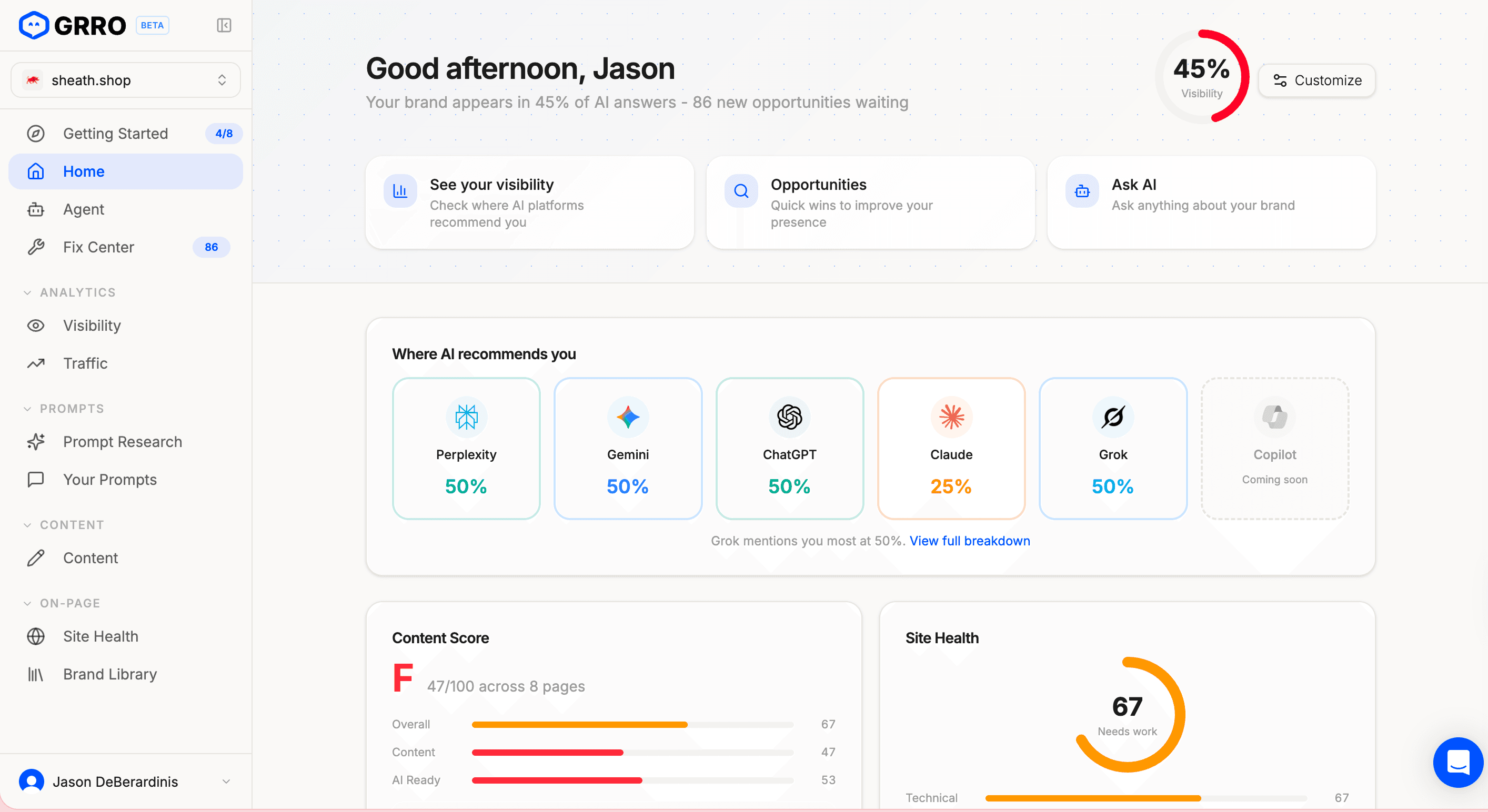
- Analyze which sources are driving the most AI recommendations (use GRRO or manual audits)
- Double down on the platforms and content types generating the best results
- Update all existing content with current data and examples
- Expand your query coverage to include more customer questions
Most brands executing this plan see their first AI recommendation improvements within 30 days. By day 90, brands that execute consistently typically move from being invisible (recommended by 0 to 1 AI engines) to being visible on 4 to 5 platforms.
For a real-world example of this strategy in action, see our case study on how a B2B SaaS brand went from 0 to 80% AI recommendation rate.
Common Mistakes That Destroy Authority Signals
Inconsistent Brand Information
Having different company descriptions, product names, or feature claims across your website, LinkedIn, review sites, and forum posts confuses AI engines. This inconsistency weakens your entity signals and reduces the chance of recommendation. Audit all your external profiles quarterly to ensure consistency.
Promotional Forum Posts
Brands that spam Reddit and Quora with promotional content get flagged, downvoted, and sometimes banned. AI engines pick up on these negative signals. The rule is simple: 90% of your forum contributions should be genuinely helpful with no mention of your brand. The other 10% can include your brand when it is directly relevant and transparently disclosed.
Ignoring Negative Reviews
Unanswered negative reviews on G2, Trustpilot, or industry-specific platforms are a direct hit to your sentiment score. AI engines see these reviews and factor them into recommendation decisions. Every negative review should receive a professional, empathetic response that addresses the concern.
One-Time Content Pushes
Publishing 20 articles in one week and then nothing for 3 months is worse than publishing 2 articles per week consistently. AI engines track publishing frequency as an authority signal. Consistency beats volume every time.
Neglecting Author Attribution
Content published without named, credentialed authors is treated as lower authority by AI engines. If your blog posts are attributed to "Team" or "Admin," you are leaving significant authority on the table. Every piece of content should have a named author with a linked bio that includes their relevant expertise.
Measuring Your Authority Signal Strength
Track these metrics to measure your progress:
- AI Recommendation Score: Your overall visibility metric across 5 AI engines. See our complete guide to AI Recommendation Scores for details.
- Multi-source mention count: The number of independent sources that mention your brand (aim for 7+)
- Platform coverage: How many of the 5 AI engines recommend your brand (aim for 5+)
- Review score average: Your average rating across review platforms (aim for 4.2+)
- Content freshness rate: The percentage of your top pages updated within the last 60 days (aim for 80%+)
- Author attribution rate: The percentage of your content with named, credentialed authors (aim for 100%)
FAQ
How long does it take for new authority signals to influence AI recommendations?
It depends on the signal and the platform. Schema markup changes are typically reflected within 2 to 4 weeks. Wikipedia updates can influence ChatGPT within 2 to 6 weeks. Reddit contributions can influence Perplexity within 48 to 72 hours. LinkedIn publishing typically takes 2 to 4 weeks of consistent posting. The fastest wins come from forum contributions (Perplexity) and content restructuring (all platforms).
Can a small brand compete with larger competitors on authority signals?
Yes, because authority signals for AI are different from traditional brand authority. A small brand with well-structured content, genuine forum presence, strong reviews, and expert-attributed content can outrank a Fortune 500 company that has ignored AI visibility. AI engines reward the quality and format of authority signals, not just the size of the brand.
Should I hire a PR firm to build authority signals?
PR coverage in major publications is valuable, but it is only one of the 5 source categories. Many brands get better results from a systematic internal effort that combines LinkedIn publishing, review management, forum participation, and content restructuring. A PR firm can accelerate the industry publications component, but the other 5 platforms require direct, ongoing effort that is hard to outsource.
What if my brand is too new for Wikipedia?
Focus on the other 5 platforms while building the independent media coverage and third-party references that will eventually qualify you for Wikipedia. In the meantime, LinkedIn, Reddit, industry publications, review sites, and your own website provide substantial authority signals. Many brands achieve strong AI visibility without Wikipedia, especially on Perplexity, Gemini, Claude,.
How do I know which authority signals are working?
Run an AI visibility audit monthly to track changes. See our guide on how to audit your AI search visibility in 30 minutes for the manual process, or use GRRO's source citation analytics and search visibility tracking to track the impact of specific changes in real time. The most telling metric is your mention rate on each platform: when it increases after a specific action (e.g., adding FAQ schema or publishing on Reddit), you have identified a working signal.
Conclusion
AI search engines recommend brands they can verify, trust, and parse. The 5 authority signals that drive recommendations, multi-source presence, expert attribution, citation-friendly formatting, recency, and entity clarity, are not abstract concepts. They are specific, buildable assets. The 6-platform source strategy (your own site, Wikipedia, LinkedIn, industry publications, review sites, and forums) gives AI engines the verification layer they require before recommending your brand. With 800M+ weekly AI queries growing at 527% year over year, the brands that build these authority signals now will capture a compounding share of a channel that converts at 4.4x the rate of traditional search. Start by auditing where you stand today with a free scan at grro.io, then use the 90-day plan above to systematically build the signals that get your brand recommended.

Co-Founder & CMO at GRRO