Generative Engine Optimization (GEO) is a term coined by academic researchers at the Georgia Institute of Technology and collaborating institutions to describe the systematic optimization of content for citation by generative AI search engines. The framework is grounded in peer-reviewed research that identified specific content characteristics that increase the likelihood of being cited by LLM-powered search engines.
The foundational GEO study tested nine optimization strategies across thousands of queries and found that adding authoritative statistics improved citation visibility by 30-40%, while incorporating expert quotations boosted visibility by approximately 20%. Other effective strategies included using clear technical language, structuring content with logical hierarchies, and ensuring factual accuracy with verifiable claims. These findings provided the first empirical evidence of what specifically drives citation in generative search.
GEO is closely related to AI Search Optimization and Answer Engine Optimization, but it is distinguished by its research-driven, empirical foundation. Rather than relying on best guesses about what AI platforms prefer, GEO provides a tested framework with measurable outcomes. It treats generative search as a distinct channel with its own rules, separate from traditional search algorithms. The research also found that the effectiveness of different optimization strategies varies by query type, with informational queries responding best to statistics and commercial queries responding best to authority signals.
Subsequent studies have expanded the GEO framework to include additional factors such as content freshness, multi-source corroboration, and entity consistency. The field is evolving rapidly as more researchers study how different LLMs select and prioritize sources during the retrieval-augmented generation process.
Key Statistics
- •Adding authoritative statistics improved AI citation visibility by 30-40%. (Georgia Institute of Technology GEO Study, 2024)
- •Incorporating expert quotations boosted generative engine visibility by approximately 20%. (Georgia Institute of Technology GEO Study, 2024)
How GRRO Helps
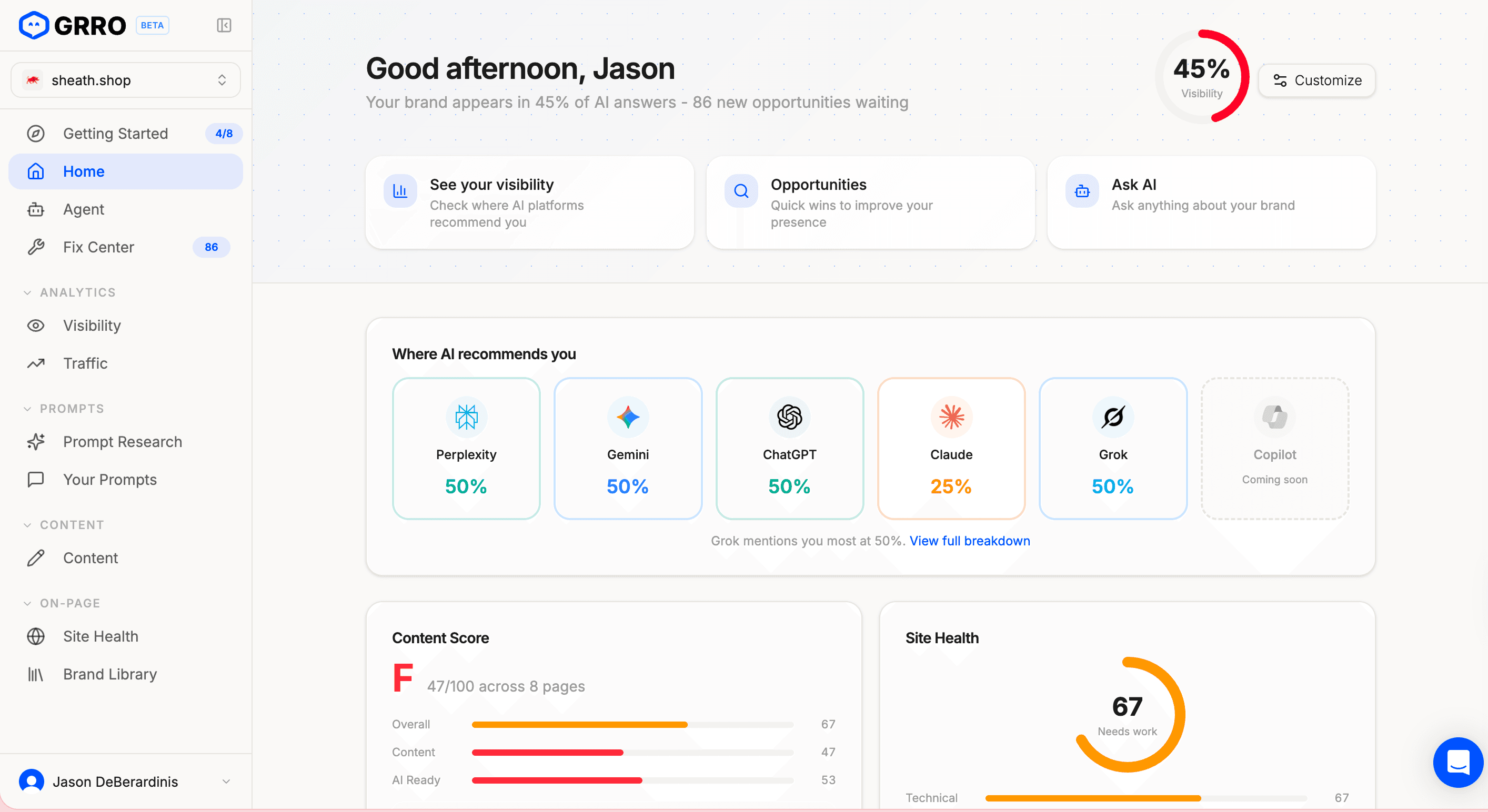
GRRO's Content Scorer is built directly on GEO research, evaluating content across nine categories derived from academic findings and giving actionable recommendations backed by published data.
Related terms
The practice of optimizing your brand and content to appear in AI-powered search engines like ChatGPT, Perplexity, Gemini, Claude, and Grok.
The credibility and trustworthiness of your content as evaluated by AI platforms when deciding which sources to cite.
The process of structuring and refining website content to maximize the chance of being cited and recommended by AI platforms.