AI Content Optimization is the process of structuring, writing, and refining website content to maximize the probability that AI platforms will cite and recommend it in their responses. It goes beyond traditional content optimization by specifically targeting the patterns and signals that large language models use when selecting sources for their generated answers.
Traditional content optimization focuses on keywords, readability, and user engagement metrics. AI Content Optimization adds additional layers: ensuring content is structured for extraction, including verifiable data and statistics, attributing expertise clearly, using precise and specific language, organizing information in logical hierarchies, and providing direct answers to user questions. Research from the Georgia Institute of Technology demonstrated that applying specific AI optimization techniques including statistics inclusion, quotation addition, and structural formatting increased generative engine citation rates by up to 40% (Georgia Tech, 2024).
The optimization process typically starts with an analysis of existing content against AI-readiness criteria. This identifies pages that are close to being citation-worthy but need specific improvements, pages that need significant restructuring, and content gaps where new pages should be created. A HubSpot content study found that pages with clear H2/H3 hierarchies, inline statistics, and FAQ sections are 2.8x more likely to be selected as AI source material than unstructured long-form content (HubSpot, 2025). Prioritization is based on tracked prompts and the competitive landscape for each topic.
Key Statistics
- •Specific AI optimization techniques increase generative engine citation rates by up to 40% (Georgia Tech, 2024)
- •Structured content with H2/H3 hierarchies and inline stats is 2.8x more likely to be AI-cited (HubSpot, 2025)
How GRRO Helps
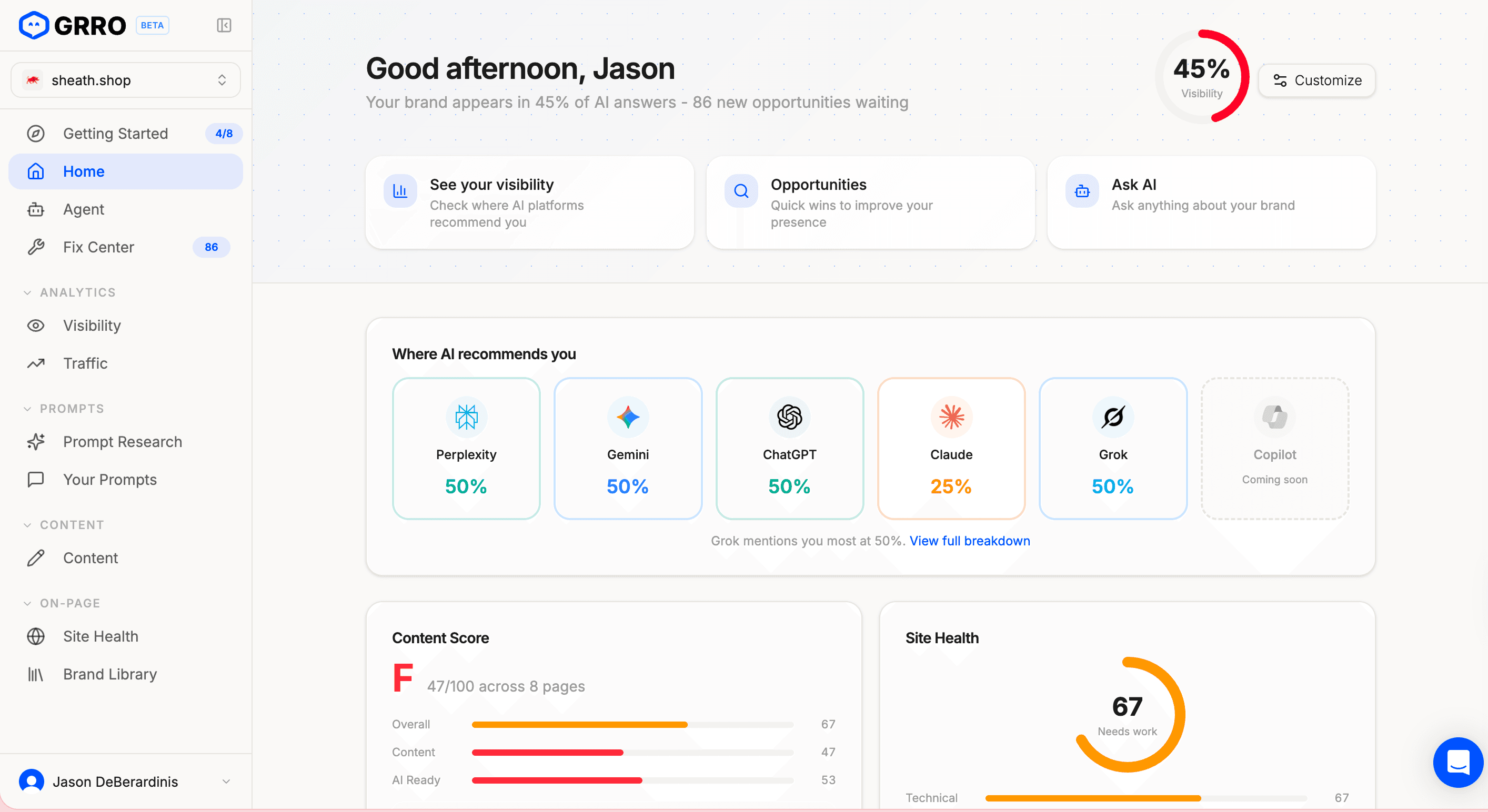
GRRO scores content against nine research-backed AI readiness categories, identifies gaps versus competitor content that earns citations, and provides actionable recommendations to improve citation rates.
Related terms
A research-backed framework for optimizing content to be cited by generative AI search engines.
Content structured to provide a direct, concise answer immediately before expanding into detail, matching how AI platforms extract information.
The credibility and trustworthiness of your content as evaluated by AI platforms when deciding which sources to cite.