Data-driven content is content that is structured around original data, research findings, survey results, or proprietary analytics rather than opinion, anecdotes, or restatement of widely known information. In AI search, data-driven content has a distinct advantage because AI platforms prioritize factual specificity and verifiable claims when selecting sources to cite.
The advantage of data-driven content in AI search is well-documented. The foundational GEO research from Georgia Tech (2024) found that adding authoritative statistics to content increased citation rates by up to 40% in generative search engines. This finding has been corroborated by multiple industry studies since. AI platforms are designed to provide accurate, useful information, and content backed by data inherently meets this criterion better than content based on subjective assessment.
Creating data-driven content does not require a large research budget. Original data can come from customer surveys, product usage analytics, transaction data, industry benchmarking, or analysis of publicly available datasets. The key is providing specific numbers with clear methodology and context. "Our analysis of 10,000 customer records found that X leads to Y" is far more citable than "Many experts believe X leads to Y."
Data-driven content also has a compounding effect on visibility. When your original data is cited by other publications, press outlets, and content creators, it builds multi-source presence that further strengthens your authority in AI knowledge bases. A single proprietary data point cited across 20 industry articles creates a web of authority that AI platforms recognize and reward with higher citation rates.
Key Statistics
- •Adding authoritative statistics increases AI citation rates by up to 40% (Georgia Tech GEO Study, 2024)
- •Data-driven content earns 6x more backlinks than opinion content (BuzzSumo, 2025)
How GRRO Helps
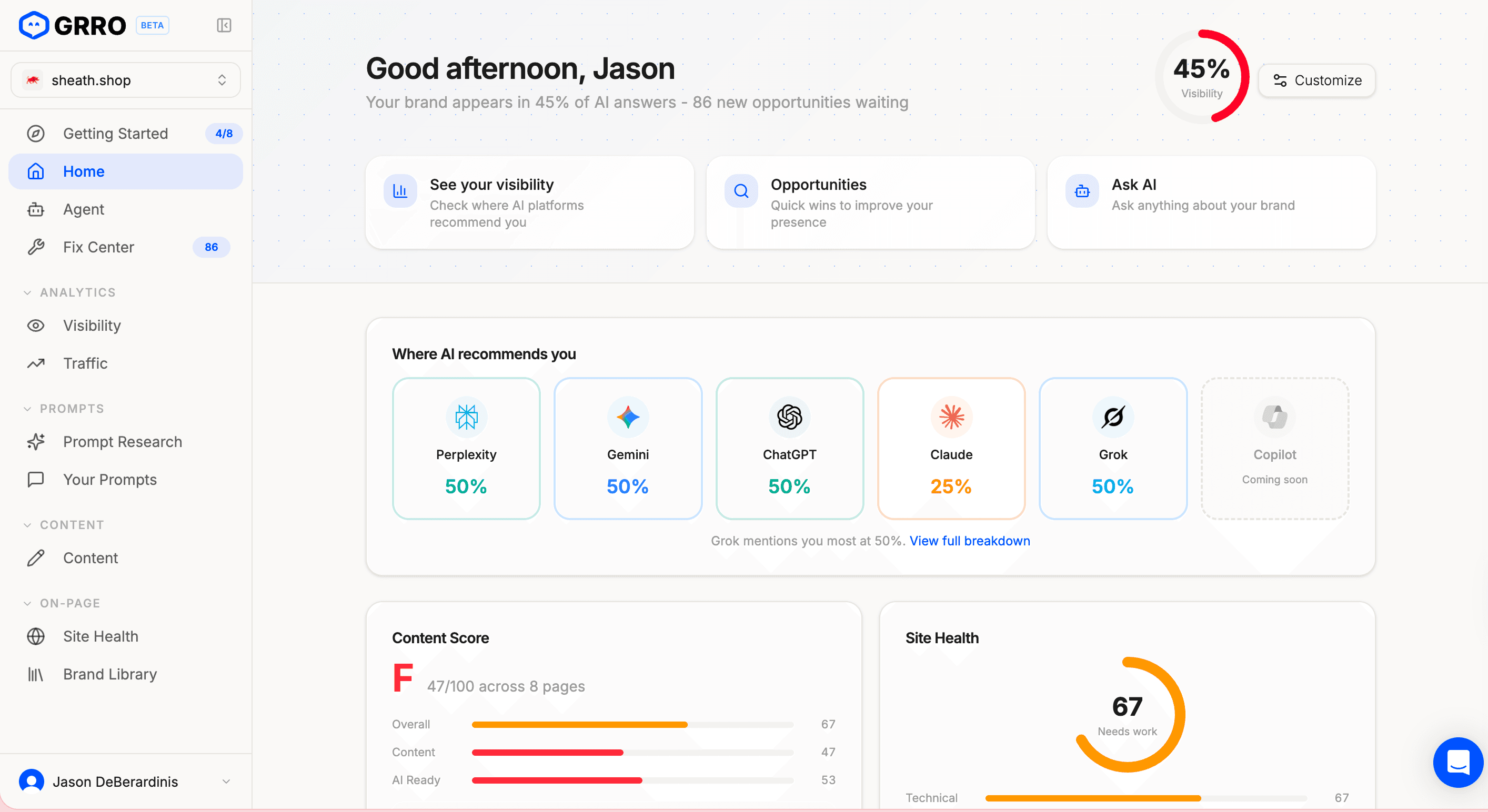
GRRO scores your content for factual density and data authority, identifying pages that need stronger data support and flagging where original research would most improve citation rates.
Related terms
A ranking concept where search engines and AI reward content that provides new, unique information not found in other top-ranking results.
The credibility and trustworthiness of your content as evaluated by AI platforms when deciding which sources to cite.
A research-backed framework for optimizing content to be cited by generative AI search engines.