An AI Search Engine is a search platform that uses artificial intelligence, specifically large language models, to generate direct answers and recommendations rather than returning a traditional list of links. Examples include ChatGPT with search, Perplexity, Google Gemini, Anthropic Claude, and xAI Grok. These engines represent a fundamental shift in how people find information and discover brands online.
The key difference between AI search engines and traditional search is the output format. Traditional search gives users ten blue links and lets them click through to find answers. AI search engines synthesize information from multiple sources and deliver a direct, conversational answer. This means the engine itself decides which brands to mention and recommend, rather than simply ranking pages and letting users choose. For brands, this shift moves the competition from "who ranks highest" to "who gets recommended."
AI search engines are growing rapidly. According to SimilarWeb data, ChatGPT reached over 3 billion monthly visits by early 2025, while Perplexity surpassed 100 million monthly visits. Younger demographics are particularly likely to start their searches with AI platforms. A Reuters Institute survey found that 30% of 18-24 year olds in the US used ChatGPT as a search tool at least weekly, a figure that is growing quarter over quarter.
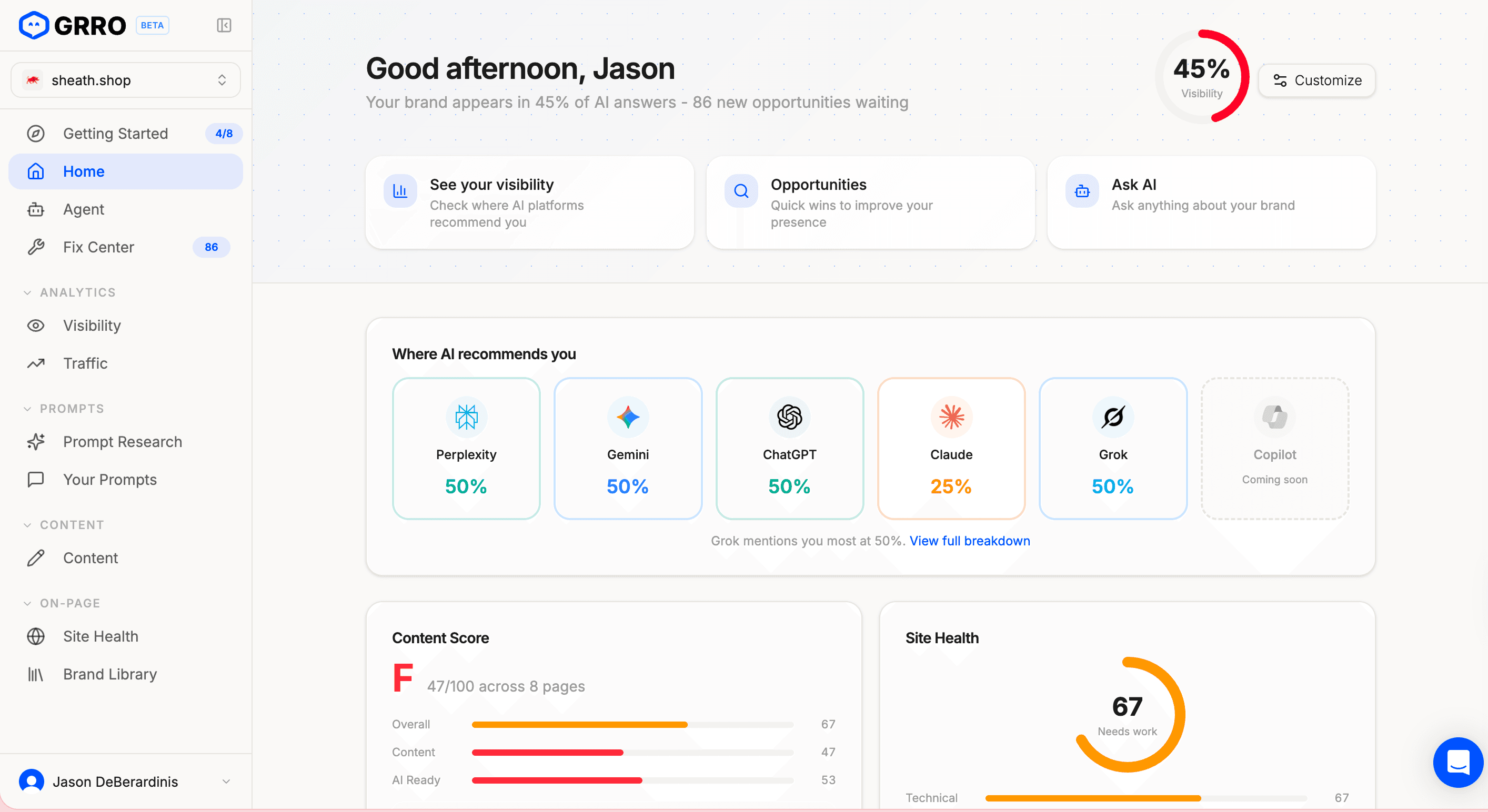
Each AI search engine has distinct characteristics that influence which brands get recommended. Perplexity emphasizes real-time web retrieval and explicit source citations. ChatGPT blends training data knowledge with Bing search. Gemini leverages Google's search index and Knowledge Graph. Claude focuses on nuanced analysis with strong reasoning. Grok prioritizes real-time social media and news data via X. These differences mean a brand's visibility can vary dramatically across platforms.
Key Statistics
- •ChatGPT reached over 3 billion monthly visits by early 2025, with Perplexity surpassing 100 million. (SimilarWeb, 2025)
- •30% of US adults aged 18-24 use ChatGPT as a search tool at least weekly. (Reuters Institute, 2025)
How GRRO Helps
GRRO tracks your brand presence across five major AI search engines simultaneously, showing you where you are strong, where you are weak, and exactly what to do to improve across each platform.
Related terms
The AI technology powering search engines like ChatGPT and Perplexity that generates human-like text responses based on training data and retrieval systems.
The technical process AI platforms use to retrieve external information and incorporate it into generated responses.
A search interaction where the user gets their answer directly from the AI platform without clicking through to any website.