AI agent search refers to queries and research performed by autonomous AI agents rather than humans directly. These agents - such as OpenAI's Operator, Google's Project Mariner, or Anthropic's computer use capabilities - can browse the web, compare products, read reviews, and even complete transactions on behalf of users. Instead of a human typing a query and evaluating results, the agent does everything autonomously.
This represents a fundamental shift in how search works. When an AI agent searches for "the best accounting software for freelancers," it does not just look at the first few results. It may visit 20+ websites, compare feature lists, read user reviews across multiple platforms, evaluate pricing pages, and synthesize its findings into a recommendation for the user. Gartner predicts that by 2028, 25% of all online purchases will involve an AI agent as a decision-maker or influencer (Gartner, 2025).
For brands, AI agent search creates a new optimization surface. Agents evaluate websites differently than humans. They prioritize structured data, clear pricing information, unambiguous product specifications, and machine-readable content. A beautiful landing page with vague value propositions might impress a human but frustrate an agent looking for concrete comparison data.
Preparing for AI agent search means ensuring your website is agent-friendly: clear structured data, comparison-ready content with specifications and pricing, accessible APIs or data feeds, and fast page load times. Brands that optimize for AI agents now will have an advantage as agentic search grows from niche to mainstream.
Key Statistics
- •By 2028, 25% of online purchases will involve an AI agent as decision-maker or influencer (Gartner, 2025)
- •AI agent web browsing sessions grew 400% year-over-year in 2025 (Anthropic, 2025)
How GRRO Helps
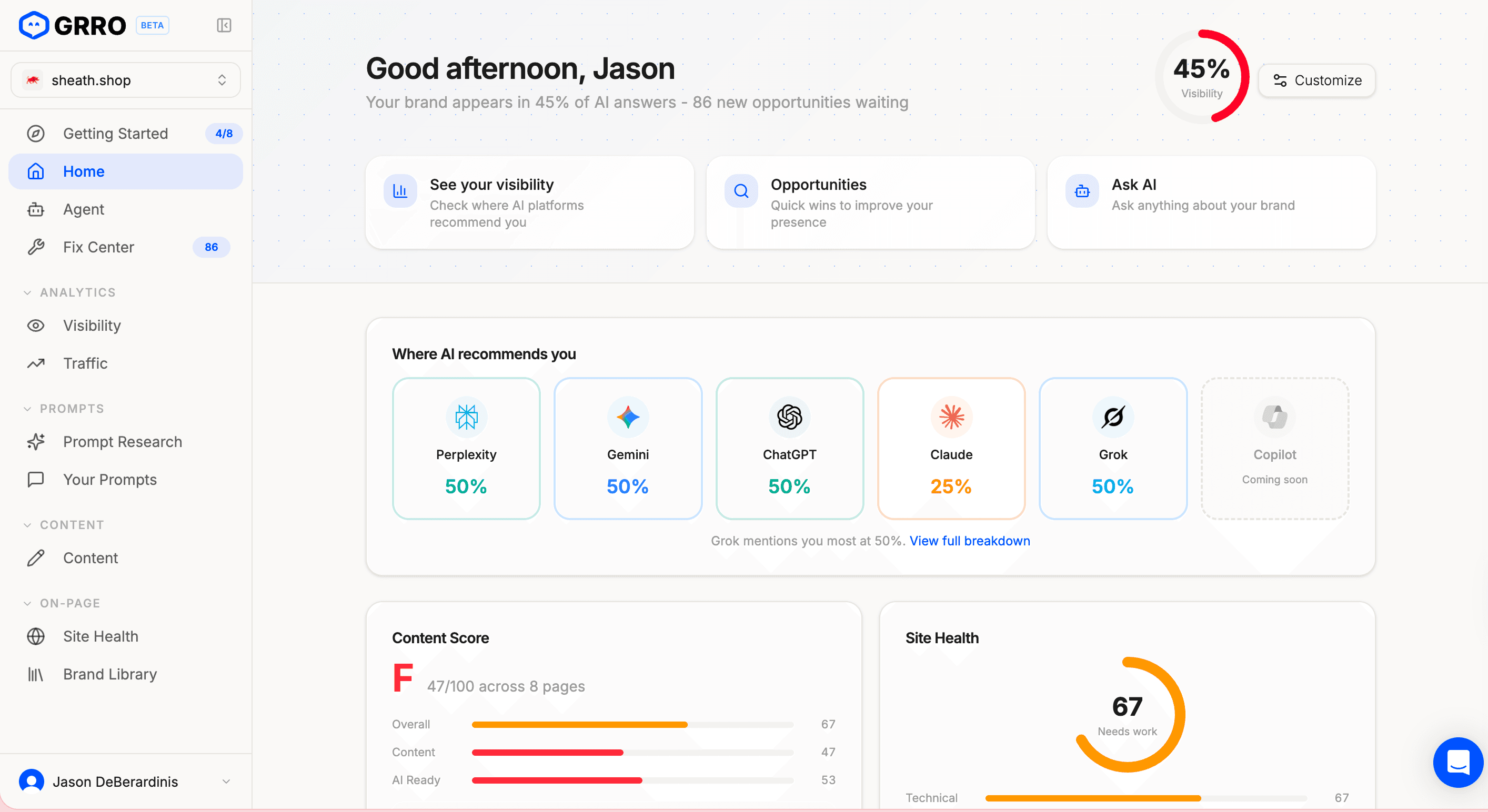
GRRO helps you optimize for AI agent search by auditing your content for structured data, comparison readiness, and machine-readable specifications that agents prioritize.
Related terms
A search platform powered by AI that generates direct answers and recommendations instead of a traditional list of links.
A structured data format that uses JSON to embed machine-readable metadata in web pages, helping AI search engines understand page content and entities.
Structured code added to your website that helps AI platforms understand your content, products, and brand identity.