Query intent classification is the process of determining the underlying purpose behind a user's search query or AI prompt. The four primary intent categories are informational (learning something), navigational (finding a specific site), transactional (buying something), and commercial investigation (comparing options before buying). AI search engines use intent classification to determine what type of response to generate and which sources to prioritize.
Intent classification is more nuanced in AI search than in traditional search because conversational prompts carry richer intent signals. "What is the best CRM for startups?" clearly signals commercial investigation intent, while "How does Salesforce pricing work?" signals a mix of informational and navigational intent. AI platforms are adept at reading these signals and adjusting their response format accordingly. According to Semrush's 2025 AI search study, 43% of AI search queries carry commercial or transactional intent, compared to 28% in traditional search.
For content optimization, matching your content to query intent is essential. AI platforms are unlikely to cite a blog post about CRM best practices when the user asks for a specific pricing comparison. Content that accurately matches the intent behind target prompts earns more citations. This means creating distinct content for each intent stage: educational content for informational queries, comparison content for commercial investigation, and conversion-optimized content for transactional queries.
Understanding intent classification also helps with prompt selection for monitoring. Tracking your visibility on high-commercial-intent prompts is more valuable from a revenue perspective than tracking informational prompts, even if the informational prompts have higher volume. Intent-aware monitoring ensures you focus on the prompts most likely to influence purchase decisions.
Key Statistics
- •43% of AI search queries carry commercial or transactional intent, vs 28% in traditional search (Semrush, 2025)
- •Commercial-intent AI citations drive 4.7x higher conversion rates than informational citations (BrightEdge, 2025)
How GRRO Helps
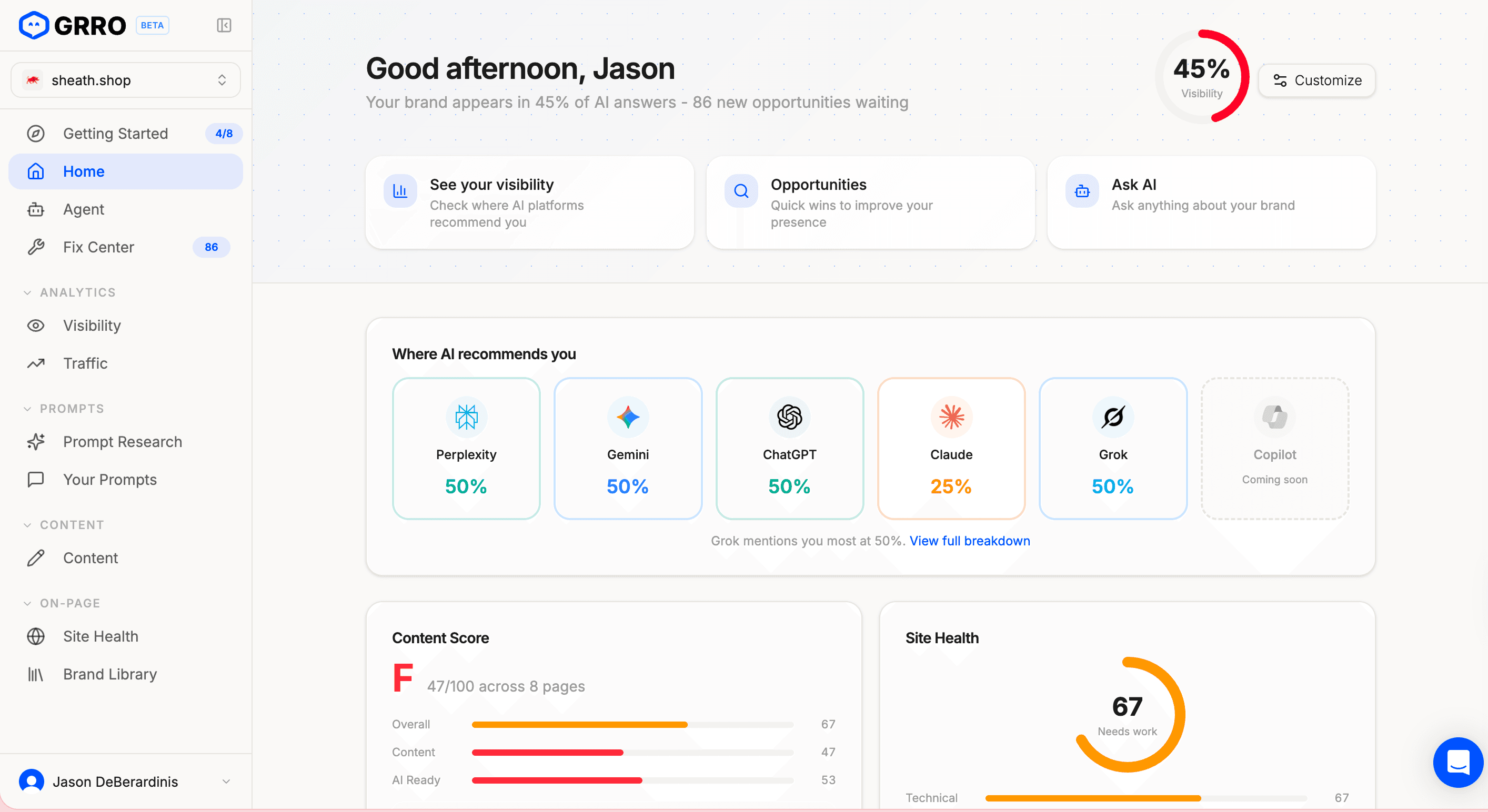
GRRO classifies tracked prompts by intent - informational, commercial, transactional - so you can prioritize visibility on the high-value prompts most likely to drive revenue.
Related terms
A search paradigm where users interact with AI through natural language dialogue rather than typed keywords, often refining queries across multiple turns.
A metric that measures how often your brand appears when users ask specific prompts or questions to AI search engines.
The signals and content characteristics that determine whether and where a brand appears in AI-generated search responses.