A content hub is a structured collection of content organized around a central topic, with a main pillar page linking to multiple supporting articles that cover subtopics in depth. Unlike scattered blog posts on related topics, a content hub creates explicit topical architecture through internal linking, clear hierarchy, and comprehensive coverage. This structure signals to both search engines and AI platforms that your site has authoritative depth on the subject.
Content hubs are particularly effective for AI search visibility because AI platforms evaluate topical authority when selecting sources. When an AI encounters a site that covers a topic from every angle - definitions, comparisons, tutorials, case studies, data analysis - it develops a stronger association between that brand and the topic. Research from HubSpot in 2025 found that content organized into hub structures generates 3.2x more organic traffic and 2.1x more AI citations than the same content published as standalone articles.
The architecture of a content hub typically follows a hub-and-spoke model. The central pillar page provides a comprehensive overview of the topic with links to each subtopic page. Each spoke page covers a specific subtopic in depth and links back to the pillar page and to related spoke pages. This creates a dense internal linking structure that helps AI crawlers understand the topical relationships between pages.
Building an effective content hub requires research-driven planning. Start by mapping the full question ecosystem around your topic (using tools like People Also Ask, AI prompts, and keyword research). Identify the subtopics that deserve dedicated pages versus those that can be covered within the pillar page. Then create the content in a deliberate order, starting with the pillar page and building out spokes based on business impact priority.
Key Statistics
- •Hub-structured content generates 2.1x more AI citations than standalone articles (HubSpot, 2025)
- •Sites with topic hubs covering 10+ subtopics rank 47% better in AI recommendation frequency (Semrush, 2025)
How GRRO Helps
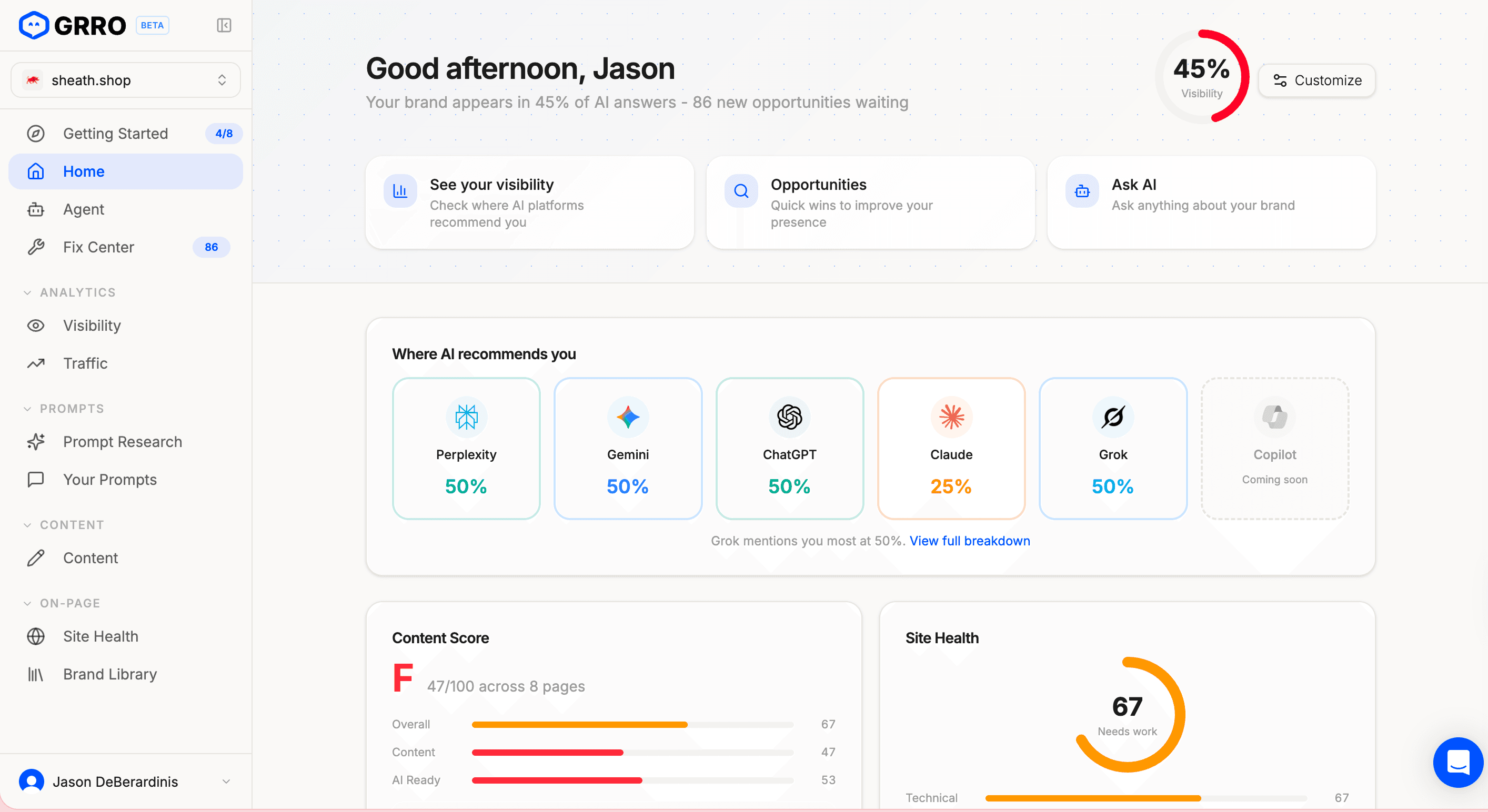
GRRO identifies your topic coverage gaps across AI platforms and recommends content hub structures that systematically close citation gaps across related prompt clusters.
Related terms
A comprehensive, long-form page that covers a broad topic in depth and serves as the central node in a content hub, linking to all related subtopic pages.
The depth and breadth of expertise your brand demonstrates on a subject, influencing whether AI platforms trust you as a source.
The gradual decline in a page's search visibility and AI citation frequency as its information becomes outdated and competitors publish fresher content.