Brand sentiment in AI refers to the qualitative tone that AI search engines use when mentioning your brand in generated responses. An AI might describe your brand enthusiastically ("a leading and highly-rated solution"), neutrally ("one option in this category"), or critically ("has faced reliability complaints"). This sentiment directly influences whether users develop positive or negative perceptions from AI interactions.
Sentiment analysis in AI search is more nuanced than traditional sentiment analysis because AI responses synthesize information from multiple sources. The AI's sentiment toward your brand reflects the aggregate tone of its training data and retrieved sources. If review sites, industry publications, and user forums are predominantly positive about your brand, AI platforms tend to reflect that positivity. A 2025 Edelman Trust Barometer report found that 71% of users adopt the sentiment expressed by AI when forming brand opinions.
Negative sentiment in AI responses is particularly damaging because it appears authoritative. When ChatGPT or Perplexity describes a brand negatively, users perceive it as an objective assessment rather than a single reviewer's opinion. This makes sentiment monitoring and management critical for brand reputation in the AI era.
Improving brand sentiment in AI requires addressing the underlying sources. If negative sentiment stems from outdated product reviews, improving the product and generating new positive coverage helps over time. If it stems from a single negative news article that the model latched onto, building a volume of positive authoritative content can dilute its influence. The strategy depends on diagnosing where the negative signal originates.
Key Statistics
- •71% of users adopt the sentiment expressed by AI when forming brand opinions (Edelman Trust Barometer, 2025)
- •Brands with net positive AI sentiment see 28% higher click-through from AI referrals (BrightEdge, 2025)
How GRRO Helps
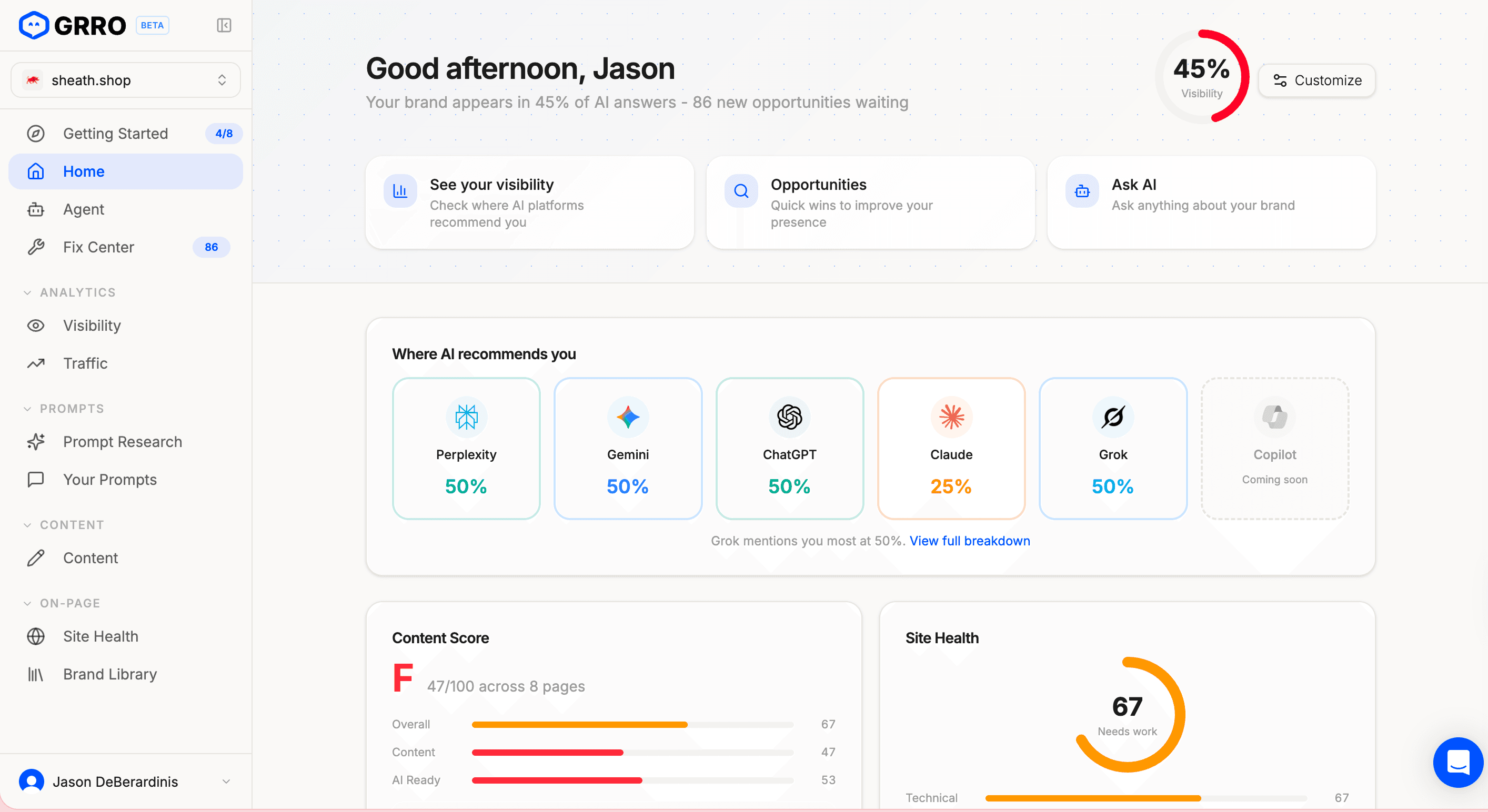
GRRO classifies brand sentiment for every AI citation using both keyword analysis and LLM-based classification, tracking sentiment trends across providers and alerting you to shifts.
Related terms
Continuous tracking of how AI search engines mention, describe, and recommend your brand across different providers and prompt categories.
When an AI platform generates false or fabricated information that appears factually correct.
The frequency at which a large language model names your brand in responses to relevant prompts, expressed as a percentage.